Why Feeling Empowered Actually Supports Healing
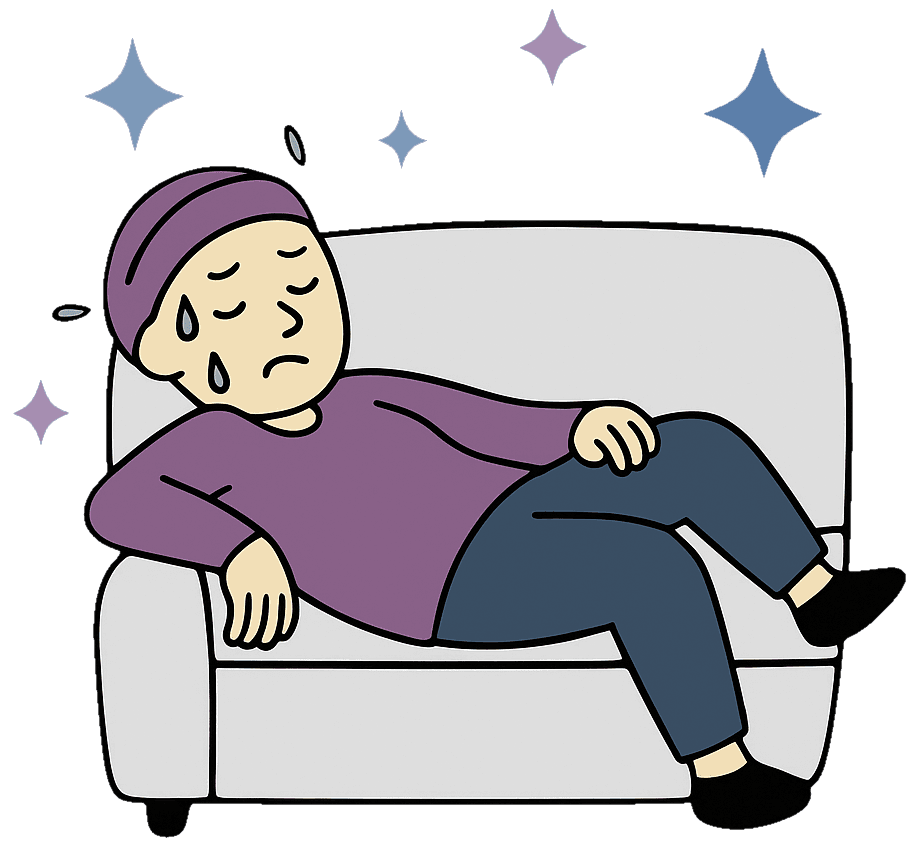
Cancer takes away a lot of things all at once: certainty, control, safety, and trust in your own body. When people talk about “empowerment” during cancer, it can sound like one more thing you’re supposed to do better.
That’s not what this is about.
The kind of empowerment that supports healing is quiet. It doesn’t require optimism, motivation, or strength. It simply helps your nervous system feel safer — and that changes everything.
This Isn’t Mindset Talk. It’s Biology.
When your body is under threat, it moves into survival mode. That’s not a choice — it’s automatic.
In survival mode:
Stress hormones stay elevated
Sleep becomes lighter and less restorative
Digestion, immunity, and healing take a back seat
Anxiety stays “on,” even during quiet moments
Cancer creates uncertainty on every level. When you don’t know what’s happening, what’s coming next, or what options exist, your nervous system stays on high alert.
Empowerment reduces uncertainty. And uncertainty is one of the biggest drivers of chronic stress.
Why Information Calms Anxiety
You don’t need all the information. You need relevant, trustworthy clarity.
When you understand:
What’s happening right now
What your realistic options are
What support exists
What decisions actually matter
…your brain doesn’t have to fill the gaps with worst-case scenarios.
That alone can lower anxiety. Not because things are suddenly easy — but because they’re no longer unknown.
Agency Helps the Body Stand Down
Agency doesn’t mean controlling the outcome. It means knowing you have some say in how you move through this.
Even small choices matter:
Knowing when something is optional vs. urgent
Understanding what can wait
Choosing support instead of pushing alone
Saying no to things that add stress
When your body senses agency, it receives a different signal:
“I’m not helpless. I have support. I have options.”
That signal allows your nervous system to shift out of constant fight-or-flight.
Empowerment Is About Reducing Load — Not Adding More
Real empowerment doesn’t pile on responsibilities. It removes unnecessary weight.
It looks like:
Clear explanations instead of medical jargon
Fewer decisions at once
Trusted guidance instead of endless research
Support that doesn’t pressure you to act
If something adds urgency, guilt, or overwhelm, it’s not empowering — even if it’s well-intentioned.
A Simple Framework for Grounded Decisions
When considering any new information, resource, or option, ask:
Does this reduce uncertainty — or increase it?
Does this help me feel calmer — or more pressured?
Does this support my body — or keep me in survival mode?
If it brings clarity and steadiness, it’s likely supportive.
If it creates fear or urgency, it may not be right right now.
Why This Matters More Than People Realize
When anxiety drops:
Follow-through with care improves
Sleep becomes more restorative
Decision fatigue eases
The body has more room to repair and recover
This isn’t about being positive.
It’s about creating conditions where healing is more possible.
A Survivor’s Perspective
During my own stage IV cancer experience, I didn’t start healing until I felt financially and informationally stable. Once the panic eased, my body finally had space to recover.
That wasn’t coincidence. It was physiology.
You deserve clarity.
You deserve support that feels steady, not demanding.
And you deserve empowerment that helps your body exhale — not perform.
You’re not behind. You’re responding exactly as a human body would.