

How Many Oncologists Does It Take to Change a Lightbulb?
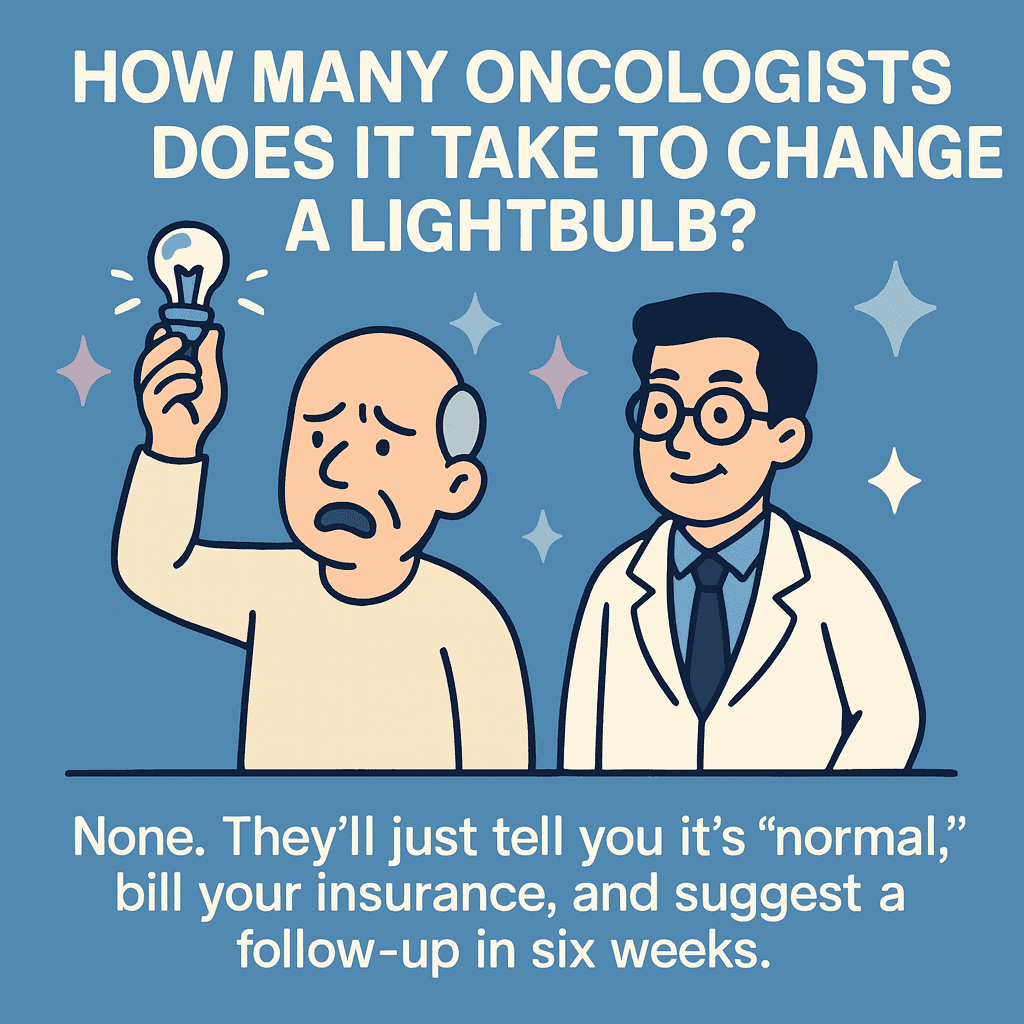
How Many Oncologists Does It Take to Change a Lightbulb?
Few things capture the surreal logic of cancer care better than a joke about a broken lightbulb that somehow becomes your problem.
Let’s get into it.
This joke flips a classic setup — the timeless “how many ____ does it take to change a lightbulb?” — and injects it with the absurd reality cancer patients know all too well:
None. They’ll tell you it’s “normal,” bill your insurance, and schedule a follow-up in six weeks.
Instantly recognizable. Painfully true. And honestly? Hilarious.
The Core Joke
The laughter comes from the mismatch between what you expect help to look like and what the system actually gives you.
A normal person:
Sees a broken lightbulb → changes it.
An oncologist (or more accurately, the medical machine):
Sees a broken lightbulb →
says it’s normal
confirms insurance was billed
recommends circling back after a standard multi-week delay
Your problem?
Still there.
Still dark.
Still flickering.
Still unresolved.
But hey — at least your deductible got involved!
Why It Resonates
Because cancer care is full of moments where you report something that feels urgent or concerning, and the response is:
“We’ll monitor it.”
“It’s probably normal.”
“Let’s wait until your next appointment.”
“If it gets worse, call us back.”
Meanwhile, you’re at home thinking:
“I didn’t want to wait for the lightbulb to explode — I wanted it fixed.”
Cancer patients live in this constant tension between urgency and bureaucracy.
Between fear and scheduling.
Between “this feels wrong” and “we’ll reassess in six weeks.”
The joke nails that contradiction.
The Deeper Meaning
Underneath the humor is a real, frustrating truth:
The medical system isn’t designed for real-time human panic — it’s designed for institutional efficiency.
You are living minute-to-minute fears.
They are living week-to-week workflows.
And that gap — that massive, emotional, exhausting gap — is where jokes like this come from.
It’s not about disrespecting doctors.
It’s about acknowledging the reality patients are forced to navigate:
Cancer is terrifying, and yet the system often treats symptoms like flickering bulbs that can wait until office hours.
Final Thought
If you’ve ever left an appointment thinking,
“Did they literally just tell me to ignore it, bill my insurance, and come back later?”
— then this joke is speaking directly to you.
The lightbulb might not get fixed today…
but at least we get to laugh about the blackout.
Few things capture the surreal logic of cancer care better than a joke about a broken lightbulb that somehow becomes your problem.
Let’s get into it.
This joke flips a classic setup — the timeless “how many ____ does it take to change a lightbulb?” — and injects it with the absurd reality cancer patients know all too well:
None. They’ll tell you it’s “normal,” bill your insurance, and schedule a follow-up in six weeks.
Instantly recognizable. Painfully true. And honestly? Hilarious.
The Core Joke
The laughter comes from the mismatch between what you expect help to look like and what the system actually gives you.
A normal person:
Sees a broken lightbulb → changes it.
An oncologist (or more accurately, the medical machine):
Sees a broken lightbulb →
says it’s normal
confirms insurance was billed
recommends circling back after a standard multi-week delay
Your problem?
Still there.
Still dark.
Still flickering.
Still unresolved.
But hey — at least your deductible got involved!
Why It Resonates
Because cancer care is full of moments where you report something that feels urgent or concerning, and the response is:
“We’ll monitor it.”
“It’s probably normal.”
“Let’s wait until your next appointment.”
“If it gets worse, call us back.”
Meanwhile, you’re at home thinking:
“I didn’t want to wait for the lightbulb to explode — I wanted it fixed.”
Cancer patients live in this constant tension between urgency and bureaucracy.
Between fear and scheduling.
Between “this feels wrong” and “we’ll reassess in six weeks.”
The joke nails that contradiction.
The Deeper Meaning
Underneath the humor is a real, frustrating truth:
The medical system isn’t designed for real-time human panic — it’s designed for institutional efficiency.
You are living minute-to-minute fears.
They are living week-to-week workflows.
And that gap — that massive, emotional, exhausting gap — is where jokes like this come from.
It’s not about disrespecting doctors.
It’s about acknowledging the reality patients are forced to navigate:
Cancer is terrifying, and yet the system often treats symptoms like flickering bulbs that can wait until office hours.
Final Thought
If you’ve ever left an appointment thinking,
“Did they literally just tell me to ignore it, bill my insurance, and come back later?”
— then this joke is speaking directly to you.
The lightbulb might not get fixed today…
but at least we get to laugh about the blackout.

Start Your Journey
Access the support you deserve.

Start Your Journey
Access the support you deserve.
Start Your Journey
Access the support you deserve.